ADA Compliant Portable Toilets: Why 5% of Rentals Must Come
If you rent out portable toilets long enough, you quit considering them as straightforward boxes went down on a jobsite or event area. They become part of the public atmosphere. People depend on them at wedding events, street fairs, institution features, fundraising events, catastrophe action areas, church gatherings, and area celebrations. When a person can not use the toilet due to the fact that the system is as well slim, the limit is too challenging, or there is no room to turn or transfer securely, the trouble is not minor. It is immediate, personal, and avoidable.
That is why the demand for accessibility issues a lot in portable cleanliness. Under the 2010 ADA Standards for Accessible Layout, as translated by the Accessibility Board and the Division of Justice, clusters of mobile single-user bathroom units need to consist of accessible devices. The guideline that catches lots of occupants off-guard is the 5 percent requirement. A minimum of 5 percent of the units in each cluster must be accessible, which applies even at momentary events.
For any person preparing an ada mobile toilet leasing, that number is not a tip and not a politeness upgrade. It is the floor.
The 5% regulation is tiny theoretically, however essential in practice
When individuals listen to 5 percent, some assume the demand is marginal enough to deal with later. In real rental planning, that is where errors begin. 5 percent sounds tiny up until you convert it right into actual systems. If a website has a collection of 20 portable commodes, at the very least one must be accessible. If there are 40, at least two must come. The point is not simply mathematics. The factor is that every collection, not just the occasion on the whole, needs to be considered.
That last part matters more than lots of coordinators understand. I have seen plans where somebody claims, "We have one ADA unit on the building, so we're covered." That might really feel practical on a map, however it misses out on just how people actually move through a website. If the toilets are set up in several separate groups, the accessible need is linked to each cluster. A person needs to not have to take a trip throughout an entire fairground since the only ada available portable restroom was put near the main gateway while the closest restroom financial institution to their seating location has no easily accessible option.
This is additionally why the Access Board's interpretation for temporary occasions is so essential. Short-lived does not imply excluded. A one-day festival still creates genuine obstacles if availability is treated as optional. The same is true for a weekend sports competition, a seasonal pumpkin spot, or a community block event that generates rental washrooms for a couple of hours. Brief duration does not remove the need.
What "accessible" implies is more specific than "larger device"
A common misunderstanding in the field is that any oversize system counts as an available one. That is inadequate. An ada certified portable toilet or ada certified available mobile bathrooms need to satisfy accessibility demands, not just use added square footage.
The confirmed standards indicate numerous technical functions that matter. The unit has to give the required clearances for the commode room itself. That includes transforming space, door steering clearances, and applicable rules for grab bars and water-closet clearances. In other words, the interior needs to benefit an individual making use of a mobility device or various other movement help, not just look roomier from the outside.
The entry matters too. An ada handicap available mobile bathroom have to have an available path and easily accessible entryway. If ramps or touchdowns are needed, those elements also have to abide by ADA technical requirements. This is just one of one of the most ignored parts of the setup. A compliant system can still end up being unusable if it is placed on soft ground, at an awkward angle, or behind a lip or incline that prevents easy entry.
There is additionally an identification requirement. Available portable bathroom systems should be marked with the International Sign of Accessibility. That issues because people need to not need to guess which device is meant to offer them. Excellent labeling is not cosmetic. It becomes part of making gain access to functional in the actual world.
Why the positioning of the device can make or damage compliance
A mobile toilet business can provide a perfectly constructed ada compliant portable restroom, and the site can still produce problems. This is where experienced planners gain their keep.
Portable cleanliness commonly gets designated late at the same time, after auto parking, fence, stages, supplier camping tents, utility gain access to, and waste pick-up courses are currently mapped. Then somebody attempts to "fit in" the available unit wherever there is leftover room. That strategy has a tendency to develop the specific obstacles the ADA is implied to prevent.
Picture a short-term event on a grassy field after rainfall. The common units are set near the edge due to the fact that the service truck needs access. The easily accessible device is practically present, yet it rests beyond a muddy, uneven approach. Or it is put behind a row of crowd-control obstacles that narrow the course. Or the only path to it crosses loosened gravel. On paper, the site has an ada mobile bathroom. In method, a visitor with movement limitations reaches the area and still can not utilize it independently.
That is why accessible course and entrance requirements are not side notes. They are central. The course to the device ought to be dealt with as part of the washroom itself. The very same goes for the area before the door, the swing of the door, and any type of ramp or touchdown that may be necessary. Availability is not practically the shell of the toilet. It consists of the path to it and the capacity to get in and maneuver once there.
Temporary events are not as well short-lived for the ADA
This factor deserves its own area since it is typically the source of the most resistance. Event organizers sometimes think that a brief timeline alters the legal expectation. It does not. The Accessibility Board has made clear that the 5 percent easily accessible requirement relates to clusters of portable single-user commode systems also at temporary events.
That is a practical acknowledgement of how life functions. Momentary occasions are where many people encounter mobile restrooms to begin with. Region fairs, ceremonies, food vehicle celebrations, college graduation events, performances in parks, holiday markets, race begin lines, and catastrophe recuperation sites all depend on short-lived cleanliness. Omitting availability from those settings would certainly omit individuals from public and social life.
There is also a self-respect problem below that people really feel promptly. If a guest arrives at an occasion and finds there is no useful toilet for them, the message is candid. It states the occasion expected a crowd, however not them. That is why understanding preparation matters. A genuinely easily accessible setup is not only regarding compliance language. It has to do with participation.
The exception people misunderstand most
There is a slim factor in the confirmed context that usually obtains repeated without adequate care: portable bathroom systems at building and construction websites utilized solely by building workers were discriminated in the mentioned 1991 requirement. That exception has led some individuals to talk as if mobile bathrooms are extensively outside ease of access rules. They are not.
The distinction is limited. For basic mobile toilet leasings, the obtainable system requirement continues to be. So if somebody is renting out units for public usage, occasion usage, client use, or any ordinary mobile sanitation demand outside that narrow context, the much safer and a lot more accurate strategy is to presume the availability demand applies and plan accordingly.
This is among those areas where half-remembered advice creates expensive errors. Somebody listens to "building sites are excluded" and repeats it as "portable toilets are exempt." Those are not the exact same declaration. Even within construction-related settings, details matter. The validated context sustains only the slim exemption explained above, not a covering rule.
Why renters must ask much better inquiries before shipment day
People often think of a portable bathroom leasing as an amount decision. How many basic systems do we require, and how many hand-wash stations? Ease of access needs a various type of discussion. Not longer, just smarter.
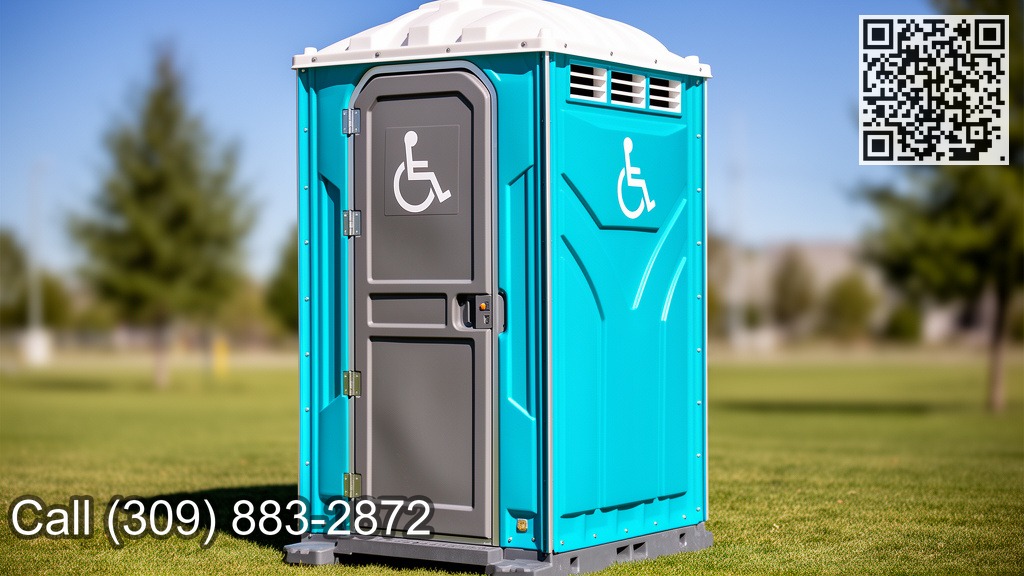
A renter should be prepared to talk about where the toilets will certainly be grouped, whether there are numerous clusters, what the path to each collection looks like, and whether the easily accessible unit will certainly have a compliant course and entrance. If the obtainable unit needs ramps or landings, those need focus early, not after the vehicle arrives.
This is where language matters also. Terms like ada compliant mobile toilets, ada-compliant portable washrooms, and ada mobile toilet demands are not just marketing phrases. They must prompt specific follow-up concerns. Is the system related to the access symbol? Has the website strategy considered path access? Is the cluster matter driving the variety of accessible devices, or is somebody assuming one available unit for the whole property?
These conversations are usually unpleasant only since they happen far too late. When they occur at the drawing board, they are usually straightforward.
A realistic instance of how the numbers work
Suppose a town closes a number of midtown obstructs for a seasonal road event. The coordinator puts 10 portable toilets near the music stage, 10 near the food suppliers, and four near the youngsters's activity area. It is tempting to believe that one ada certified portable commode someplace on site covers the demand due to the fact that the complete count is 24 and 5 percent of 24 is just over one.
That is not the proper way to review the policy. The requirement relates to each cluster. In that layout, the stage cluster requires an easily accessible unit, the food vendor cluster requires an easily accessible device, and the smaller sized cluster near the kids's location need to also be reviewed as its own grouping. The rationale is basic. Gain access to needs to exist where the toilets are given, not be combined in a remote edge of the event.
This is the type of problem that never appears in marketing renderings, but it identifies whether visitors can in fact make use of the centers that were leased for them.
Accessibility is not a high-end add-on
In some rental conversations, the obtainable system still obtains gone over as though it were a premium attribute, like updated finishes or a vanity sink. That framing is both unreliable and purposeless. An ada compliant mobile bathroom belongs to baseline access when the standards ask for it.
Treating availability as an add-on often tends to produce two bad habits. The initial is waiting to see if the spending plan "enables" for it. The second is placing the easily accessible system in a low area because the prime areas were appointed first. Both routines lead in the incorrect direction.
A more mature method is to develop accessibility into the initial draft of the sanitation strategy. When you do that, the remainder of the logistics normally come to be easier. Routes are clearer. Collection positioning is much more calculated. Signage and traffic flow make even more feeling. You prevent the shuffle of trying to retrofit access in the last 24 hours.
The broader conformity climate is moving toward extra scrutiny, not less
Even if someone wants to assume directly regarding mobile hygiene, the bigger conformity environment is worth seeing. ADA requirements are being imposed in a broader landscape throughout markets. The Division of Justice's 2026 assistance extending the deadline for sure state and local government web and mobile accessibility policies to April 26, 2027 for bigger entities is one instance of that bigger pattern.
That support is about digital availability, not mobile commodes. Still, it shows something important. Accessibility conformity is not fading right into the history. It continues to be an active part of exactly how organizations are anticipated to serve the public. For event coordinators, municipalities, place drivers, and contractors, that indicates bathroom availability must be seen as one piece of a larger compliance and incorporation picture.
The old habit of treating gain access to as a particular niche worry is obtaining more challenging to safeguard. Individuals are taking note, and they should be.
Where great intentions commonly fall short
Most ease of access failures in portable toilet leasings are not the outcome of open hostility. They come from assumptions.
One assumption is that a larger unit has to automatically be certified. Another is that one accessible system somewhere on site suffices. Another is that temporary use softens the policies. An additional is that delivery teams can resolve path issues on the fly when they show up. Those presumptions can all appear sensible in a rushed planning conference, and all of them can produce an arrangement that does not work.
The far better habit is to slow down at the ideal minute. Not for hours, simply long enough to ask what gain access to will certainly resemble from the visitor's perspective. Can the individual reach the unit? https://andersonkjbz135.urbanvellum.com/posts/ada-portable-bathroom-rental-for-events-comprehending-obtainable-system-requirements Can they determine it? Can they enter it? Can they steer inside it? Those appear questions, yet they cut through a surprising quantity of confusion.
A short preparation check prior to you rent
If you desire one useful screen for an ada portable commode service, utilize this prior to the order is completed:
- Count each bathroom collection individually and use the 5 percent easily accessible demand to that cluster.
- Confirm the obtainable device is really certified, not simply oversized.
- Check that the course and entryway to the device will certainly be accessible, including any needed ramps or landings.
- Make sure the device will display the International Icon of Accessibility.
- Review placement early sufficient that accessibility is built into the site strategy, not improvisated on shipment day.
That checklist is easy, but it covers the errors I see duplicated most often.
The human side of the rule
Rules can begin to sound abstract when individuals chat just in portions and technical terms. The human fact is much easier to comprehend. A restroom is not optional infrastructure. At an occasion or public celebration, it impacts whether people can stay, take part, function, volunteer, or appreciate themselves without anxiety.
For a moms and dad helping an adult child with a mobility special needs, an obtainable portable toilet can be the distinction in between attending and staying home. For a professional making use of a wheelchair at a memorial event, it can imply the difference between being welcomed and being sidelined. For an older grown-up whose balance is not what it when was, adequate handling space and a steady entryway are not small benefits. They are what make independent usage possible.
That is why the 5 percent policy is worthy of more regard than it normally obtains. It is a minimum that acknowledges an apparent fact: if mobile restrooms are offered the general public, a few of those restrooms must come in each collection where they are offered.
When planners take that seriously, people notice, frequently quietly. The event feels much easier. The website really feels more thoughtful. Guests invest less time problem-solving and more time participating. That is what good access does. It removes rubbing before it turns into exclusion.
Getting it best is normally easier than fixing it late
The good news is that conformity right here is not mystical. The key points are clear. At least 5 percent of devices in each cluster should be accessible. Momentary occasions are consisted of. Available units should be identified with the International Sign of Ease Of Access. They should have an accessible path and entry, and any required ramps or touchdowns must satisfy ADA technical needs. The devices themselves need to satisfy the pertinent toilet-room technological guidelines, including clearances, turning room, and relevant grab-bar and water-closet requirements.
That might sound technical, however in practice it boils down to care, preparing, and a readiness to believe from the customer's viewpoint. If you are renting out ada compliant portable restrooms for an occasion or public-facing website, access ought to be worked out as early as amount, maintenance, and placement.
People rarely bear in mind the portable toilets at a well-run occasion, which is usually an excellent indication. It implies the facilities functioned, individuals discovered them, and no one needed to negotiate unnecessary challenges simply to meet a fundamental requirement. For available visitors, that normal experience is exactly the point.
 Ask ChatGPT
 Ask Grok
 Ask Perplexity
 Ask Claude
 Ask Google AI
 Ask You